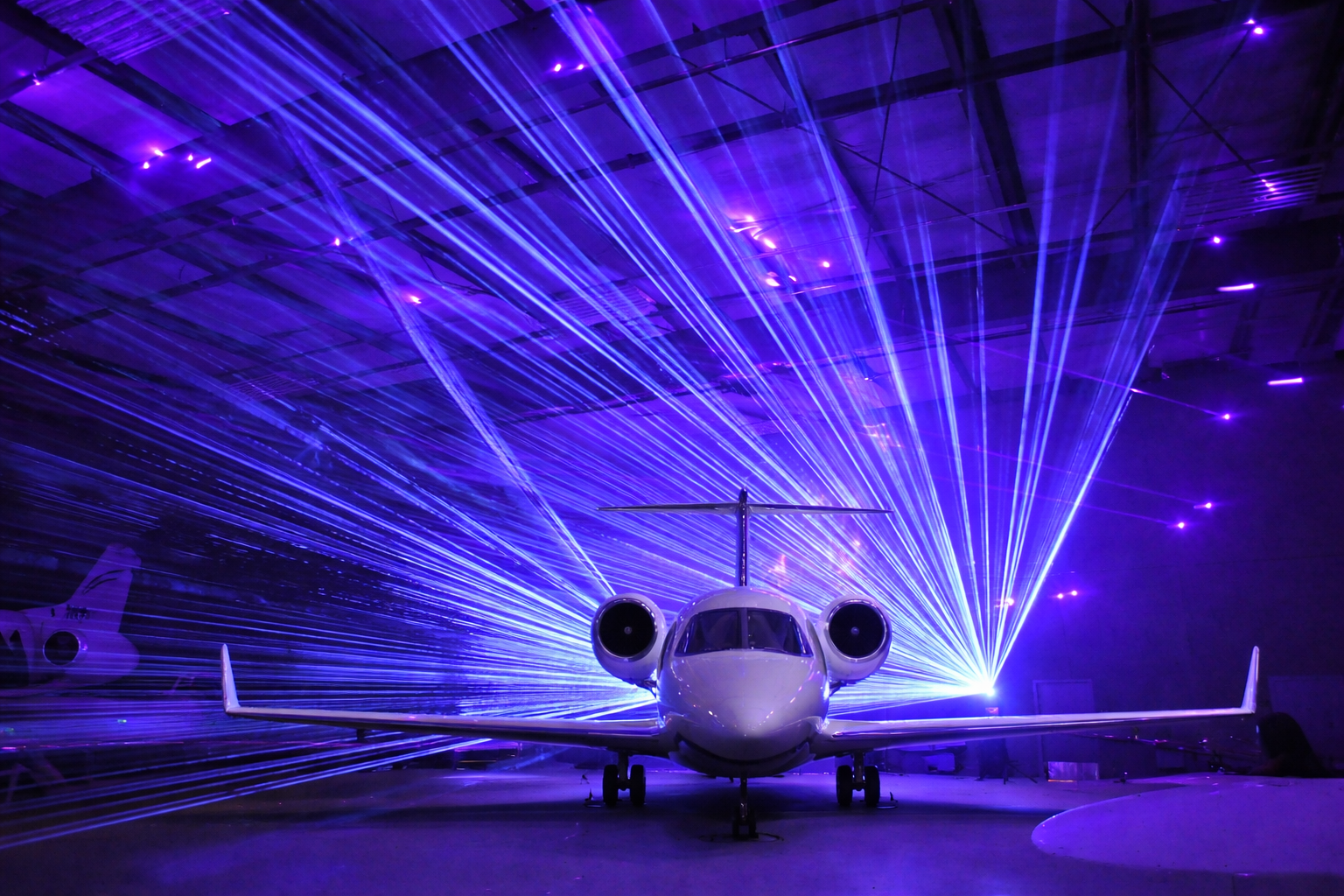
Hangar venues offer unmatched scale and flexibility.
Their open volumes and industrial character make them ideal for large corporate events that demand impact. But without thoughtful production and event design, these spaces can feel overwhelming, impersonal, or unfinished.
In hangar-style blank slate venues, production and design are not decorative layers.
They are the structure that gives the event purpose, flow, and meaning.
This article explores how production and event design work together to transform hangar venues into compelling environments for large corporate events.
Understanding Hangar Venues as Blank Slate Environments
Hangar venues strip everything back.
They typically provide:
- Vast, open floor space
- High ceilings with rigging potential
- Minimal built-in features
- Maximum creative freedom
This blank slate approach places responsibility firmly on the production and design team.
Every decision matters.
The Role of Production in Hangar Venues
Production as the Framework
In traditional venues, production adapts to architecture.
In hangar venues, production creates the architecture.
This includes:
- Power and technical infrastructure
- Rigging and truss systems
- Audio, lighting, and video integration
- Safety and compliance planning
Production forms the backbone of the event.
Planning for Scale and Complexity
Large corporate events require precision.
Key production considerations include:
- Load-in and load-out schedules
- Crew numbers and access
- Equipment storage and back-of-house zones
- Rehearsal and contingency planning
Early production involvement prevents costly redesigns later.
Event Design: Shaping the Audience Experience
Designing Flow and Movement
In a hangar venue, design dictates how people move.
Effective event design considers:
- Arrival experience
- Registration and queuing
- Transitions between spaces
- Clear wayfinding
Design ensures the event feels intentional, not chaotic.
Creating Zones Within a Vast Space
Blank slate venues benefit from zoning.
Common zones include:
- Main stage and audience area
- Breakout or workshop spaces
- Networking and hospitality areas
- Feature or experiential installations
Zoning creates intimacy within scale.
Integrating Production and Design
Collaboration From the Start
Production and design must develop together.
This ensures:
- Creative ideas are technically achievable
- Budgets are realistic
- Timelines are respected
Separation between the two leads to compromise.
Supporting Storytelling and Brand Identity
Event design is not just visual.
It is narrative.
Production elements support:
- Brand storytelling
- Key messaging
- Emotional pacing
In hangar venues, design and production carry the brand.
Avoiding Common Pitfalls
- Designing without technical input
- Overcomplicating layouts
- Ignoring audience comfort
- Treating hangar venues like conventional spaces
Hangar venues reward clarity, not clutter.
SEO Strategy
Primary Keyword:
Production and event design in hangar venues
Secondary Keywords:
- Blank slate venues
- Large corporate events
- Corporate event production
- Event design
- Experiential corporate events
Keywords are integrated naturally throughout the content, headings, and meta description.
Frequently Asked Questions (FAQ)
Are hangar venues suitable for high-end corporate events?
Yes. With professional production and thoughtful design, hangar venues deliver premium experiences at scale.
Does production drive design or vice versa?
They should evolve together. Strong collaboration ensures balance.
How early should production and design begin?
Ideally at venue selection or immediately afterward.
Are hangar venues more complex to manage?
They require expertise, but not more risk when handled correctly.
Call to Action
Production and event design determine whether a hangar venue feels powerful or overwhelming.
Next step:
Engage experienced production and event design specialists early to unlock the full potential of your hangar venue for large corporate events.